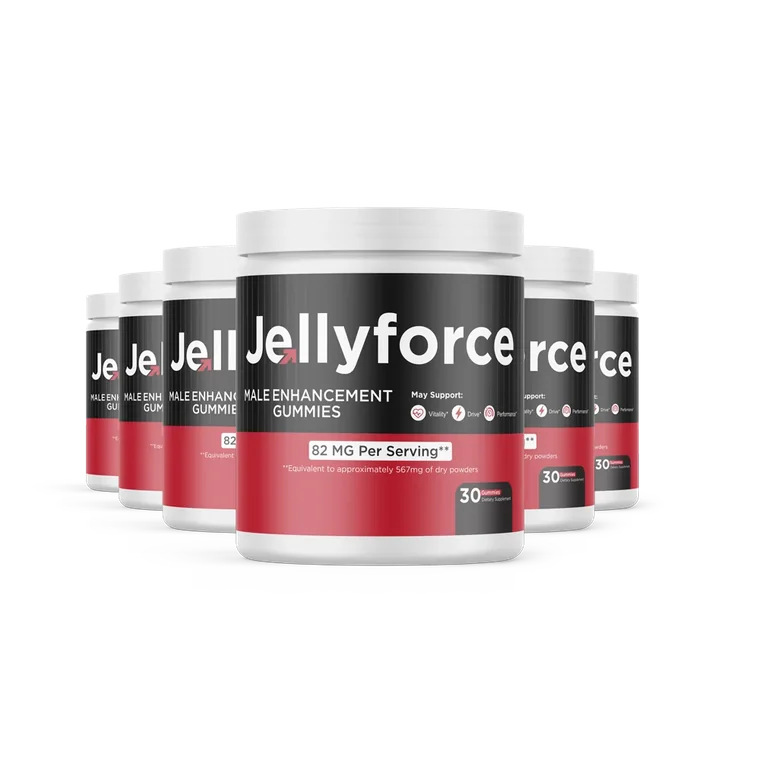
Regular price: $99 per jar
Today from $49 per jar
Order Jellyforce from the official websiteBacked by the 60-day money-back guarantee. Secure checkout on the official website.
Acute stress is adaptive: a short spike in cortisol and adrenaline mobilises energy and sharpens focus. The system is built for it.
Chronic activation is a different matter. Sustained load is associated with disrupted sleep architecture, impaired recovery from training, elevated blood pressure, worse glucose handling and suppressed immune function. Nothing about that list is separable from energy and physical performance.
Stress in men frequently presents as irritability, withdrawal, working longer, drinking more or physical symptoms rather than as stated distress. It gets labelled as being busy rather than being under load.
The practical consequence is that it goes unaddressed for years while its downstream effects — poor sleep, low energy, declining training consistency — get attributed to age.
Alcohol as a downregulation tool is the most common and most counterproductive. It shortens sleep onset while degrading sleep quality in the second half of the night, so the intervention worsens the thing driving the problem.
Working harder to get past the pressure is the second. Recovery capacity is finite, and chronic stress reduces it while demand stays constant.
The adaptogenic component of a men's formula targets this pathway specifically, and it is a legitimate mechanism with real research behind it. It is also a modifier of a system that structural change affects far more.
If the load itself is unsustainable, address the load. Then consider what supports the rebuilt version.
If stress is producing persistent low mood, loss of interest in things you normally enjoy, sleep problems lasting weeks, or thoughts of harming yourself, that is a medical conversation and a genuinely important one. Speak to your doctor.
Backed by the 60-day money-back guarantee. Secure checkout on the official website.