HomeBlog › Lifestyle & Recovery

Lifestyle & Recovery

Belly Fat and Men's Health: Why Location Matters

Not all body fat behaves the same way. Abdominal fat in particular is metabolically active in ways that matter for energy and vitality.

Written by the Jellyforce Editorial Team Fact-checked against the current product label Last updated 5 August 2026 Sources: NIH, NCCIH, FDA

On this page

  1. Visceral versus subcutaneous
  2. The hormonal angle
  3. What measurement to use
  4. What actually shifts it
  5. What does not work

Visceral versus subcutaneous

Subcutaneous fat sits under the skin. Visceral fat sits deeper, around the abdominal organs, and is metabolically active tissue rather than passive storage.

Visceral fat secretes inflammatory signalling molecules and is associated with insulin resistance, cardiovascular risk and hormonal changes in a way subcutaneous fat is not. This is why waist circumference is a more useful marker than weight alone.

The hormonal angle

Adipose tissue expresses aromatase, the enzyme that converts testosterone to oestradiol. Higher fat mass is therefore associated with hormonal shifts, and low testosterone in turn promotes fat accumulation — a loop that runs in both directions.

This is a genuine mechanism and it is also routinely oversold. It is not a reason to buy a testosterone booster; it is a reason to address body composition, which is what actually moves the variable.

What measurement to use

Waist circumference at the navel, measured consistently, tells you more about metabolic risk than the number on a scale. Two men at identical body weight can carry very different visceral fat loads.

Track it monthly rather than daily. Weight fluctuates with fluid; waist measurement over months does not lie.

What actually shifts it

  1. A sustained calorie deficit. There is no way around this and no food that bypasses it.
  2. Resistance training to protect muscle mass during the deficit, so you lose fat rather than tissue.
  3. Protein intake maintained through the deficit — see protein basics.
  4. Sleep, because restriction worsens appetite regulation and makes the deficit harder to hold.
  5. Alcohol reduction, which is usually the largest single discretionary calorie source.

What does not work

Spot reduction is not a thing. No exercise targeting the abdominal muscles reduces the fat above them, and no supplement selectively mobilises visceral fat. Anything marketed on that premise is misrepresenting basic physiology.

Disclaimer: this article is general information, not medical advice. Jellyforce is a dietary supplement and is not intended to diagnose, treat, cure or prevent any disease. Individual results vary. For healthy adults aged 18 and over. Talk to your doctor before starting any supplement, particularly alongside prescription medication.

Jellyforce Editorial Team

We write from the product label outward, check each ingredient against what it is genuinely studied for, and publish the unflattering parts too. See our editorial standards.

Keep reading

All 50 articles

Answers

Frequently Asked Questions

No. Spot reduction is not physiologically possible. Fat loss occurs systemically in a pattern largely determined by genetics.

For metabolic risk it is often more informative, because it reflects where fat is stored rather than total mass alone.

This website may earn a commission on purchases made through links to the official Jellyforce store, at no additional cost to you. Our editorial standards and affiliate disclosure are published in full on this site.

No. Jellyforce is a dietary supplement and is not intended to diagnose, treat, cure or prevent any disease, including erectile dysfunction or low testosterone.
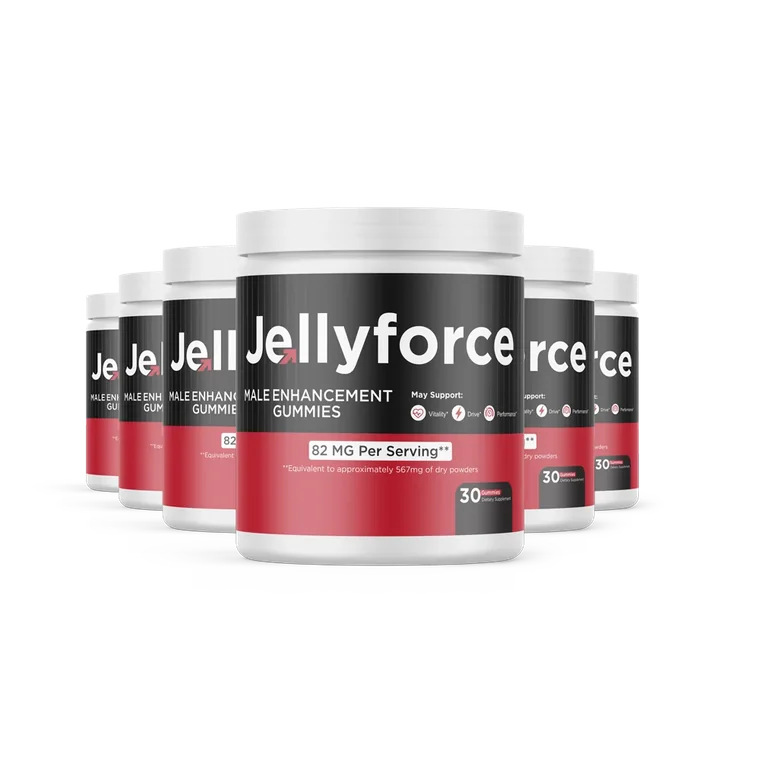
Jellyforce six-jar package
Regular price: $99 per jar
Today from $49 per jar
Order Jellyforce from the official website

Backed by the 60-day money-back guarantee. Secure checkout on the official website.

Order Jellyforce — From $49 60-day money-back guarantee • Official website only