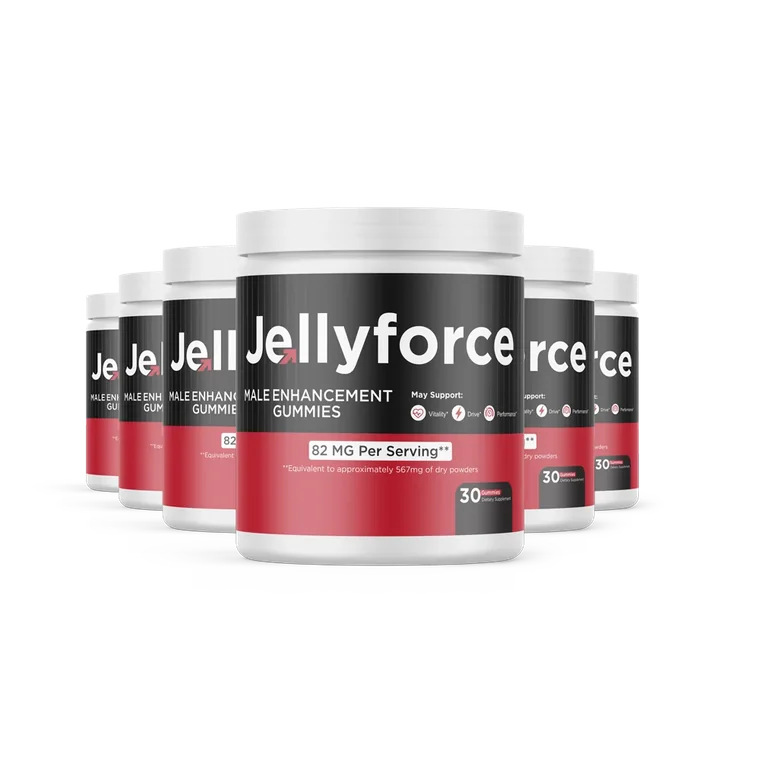
Regular price: $99 per jar
Today from $49 per jar
Order Jellyforce from the official websiteBacked by the 60-day money-back guarantee. Secure checkout on the official website.
The word was coined in the Soviet Union in the mid-twentieth century by pharmacologist Nikolai Lazarev, and developed further by Israel Brekhman. It described substances proposed to increase non-specific resistance to physical, chemical and biological stressors.
The original criteria were reasonably strict: an adaptogen should be non-toxic at normal doses, should produce a non-specific response that increases resistance to varied stressors, and should have a normalising effect — helping return the body toward balance regardless of which direction it has drifted.
The honest summary: some adaptogens, ashwagandha in particular, have randomised human trials examining stress response and related measures. Most have far less. The category label does not confer evidence on every member — a point the NCCIH Herbs at a Glance database makes clear when you check individual botanicals.
“Adaptogen” is a proposed mechanism class, not a proof of effect. A product describing itself as adaptogenic has told you what it is trying to do, not that it succeeds.
Three patterns worth recognising:
Adaptogens are a plausible and interesting category with one genuinely well-studied member and several thinly-studied ones. Treat the word as a description of intent, then check the specific ingredient against a neutral source.
In Jellyforce, the adaptogenic component is ashwagandha — deliberately the best-studied option in the class.
Backed by the 60-day money-back guarantee. Secure checkout on the official website.