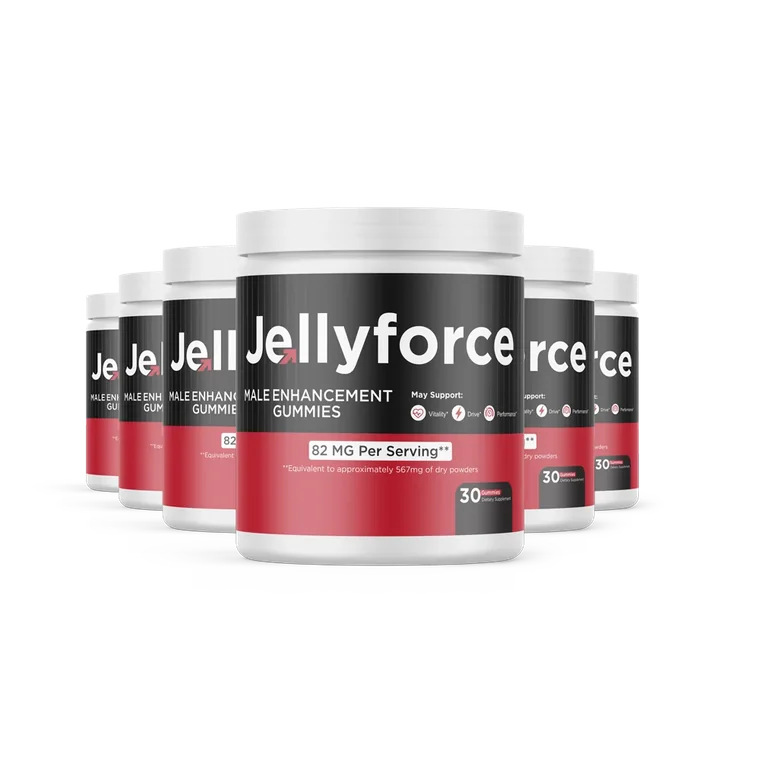
Regular price: $99 per jar
Today from $49 per jar
Order Jellyforce from the official websiteBacked by the 60-day money-back guarantee. Secure checkout on the official website.
Ashwagandha (Withania somnifera) is a small evergreen shrub native to India, the Middle East and parts of Africa. Its root has been central to Ayurvedic practice for more than two thousand years, traditionally classed as a rasayana or rejuvenative tonic.
In modern terms it is described as an adaptogen: a substance proposed to help the body maintain balance under stress. The NCCIH ashwagandha summary provides a neutral summary of the current evidence base and is worth reading before you buy any formula containing it.
Ashwagandha has been studied more than most botanicals in this category, in randomised controlled trials with human participants rather than only cell cultures. The areas most frequently examined are:
Important caveat: many trials are small, and study quality varies. The honest summary is “more evidence than most botanicals in this space, and less than a pharmaceutical”.
This is the practically useful part. Ashwagandha studies typically run eight to twelve weeks and measure outcomes at those points. Very few examine acute single-dose effects, because that is not how adaptogens are proposed to work.
If you take an ashwagandha-containing product for three weeks, feel nothing dramatic, and conclude it does nothing, you stopped before the window the research uses. That single misunderstanding accounts for a large share of negative supplement reviews across the whole category.
Ashwagandha earns its place in a men's formula for a reason most marketing misses: it targets stress load, which is one of the largest real-world drains on energy, sleep and drive in working-age men — and unlike age or genetics, it is an input you can influence.
It is not a stimulant, not a hormone, and not a fast-acting compound. Judge it at week eight, with a doctor's clearance if any of the cautions above apply to you. See also: the full ingredient breakdown.
Backed by the 60-day money-back guarantee. Secure checkout on the official website.