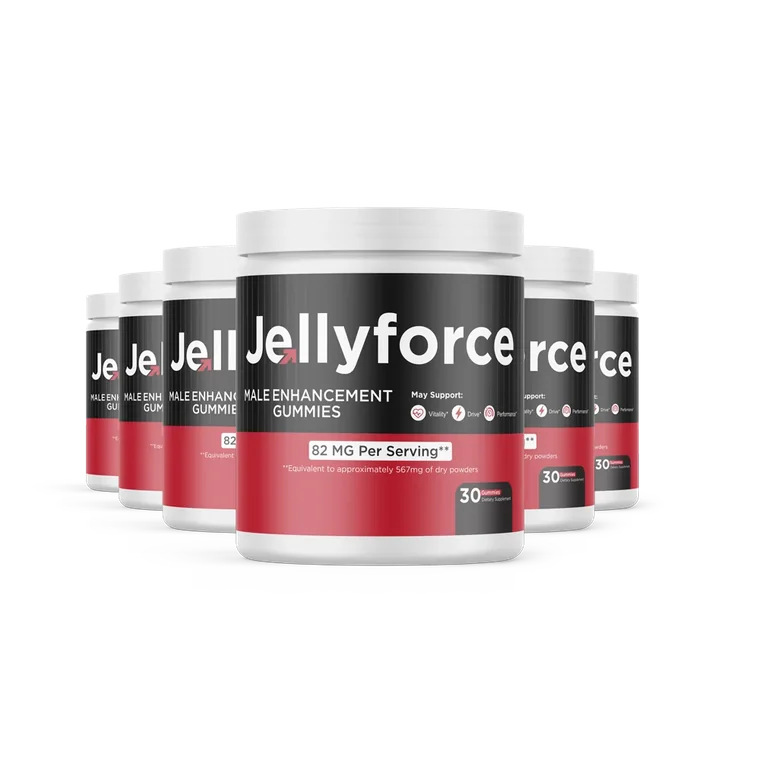
Regular price: $99 per jar
Today from $49 per jar
Order Jellyforce from the official websiteBacked by the 60-day money-back guarantee. Secure checkout on the official website.
Endurance is your capacity to sustain submaximal effort over time — largely a function of cardiovascular efficiency, mitochondrial density and fuel availability.
Stamina, used precisely, describes your ability to maintain output quality under fatigue. It is closer to resistance to performance decay than to raw duration.
You can have one without the other. A distance runner has high endurance and may still fade badly under load-bearing work. A powerlifter has high output and may be finished after ninety seconds.
| Endurance | Stamina | |
|---|---|---|
| Main limiter | Oxygen delivery and use | Fatigue resistance and recovery between efforts |
| Trained by | Sustained aerobic work | Interval and repeated-effort work |
| Adapts in | Weeks to months | Weeks |
Circulation matters to both, which is why nitric-oxide support gets discussed in this context — see our L-arginine guide.
A rough self-test. Think about the last time you ran out of capacity. Did you fade gradually across an hour, or did your output collapse after a few hard efforts with short rest?
Gradual fade over duration points to endurance. Collapse on repeated efforts points to stamina. They call for different training.
Nutritional support can assist the circulation and stress-recovery side of both qualities. Neither is built by supplementation. The training stimulus is the cause; everything else is a modifier.
That is the honest hierarchy, and it does not change based on what any product page says.
Backed by the 60-day money-back guarantee. Secure checkout on the official website.